 Upstate Sown
 Upstate Living
What Mud Season Actually Means for a Rural Driveway
What Mud Season Actually Means for a Rural Driveway
If you're coming from the city or the suburbs, a driveway has probably always been a short, paved thing between the street and your door. Maybe you shoveled it a few times a year. Out here, in Delaware, Greene and Schoharie counties, a driveway is a different animal — often long, often dirt or gravel, and sometimes climbing a grade. And once a year it goes through something the whole region simply calls mud season.
It's not a disaster. But it's real, and it catches new residents and weekenders off guard more than almost anything else about rural life. Here's what's actually happening, and what to do about it.
Why mud season happens
Mud season is the stretch in late winter and early spring when the ground is thawing from the top down while it's still frozen underneath. Meltwater and rain have nowhere to drain, so the top layer of soil turns to soup. On a paved suburban driveway this barely registers. On a dirt or gravel road or driveway, the surface loses its firmness and vehicles start to sink, rut and spin.
In our part of the Catskills this usually lands somewhere in March into April, but it isn't a date on the calendar — it follows the weather. A warm spell after a hard freeze can start it early; a late cold snap can stretch it out. Some years are mild. Some years are memorable.
The key thing to understand: mud season is worst where water sits and where traffic is heavy. A well-drained, well-built driveway may barely have a bad week. A flat, poorly-drained one can be a problem for a month.
What it actually looks like
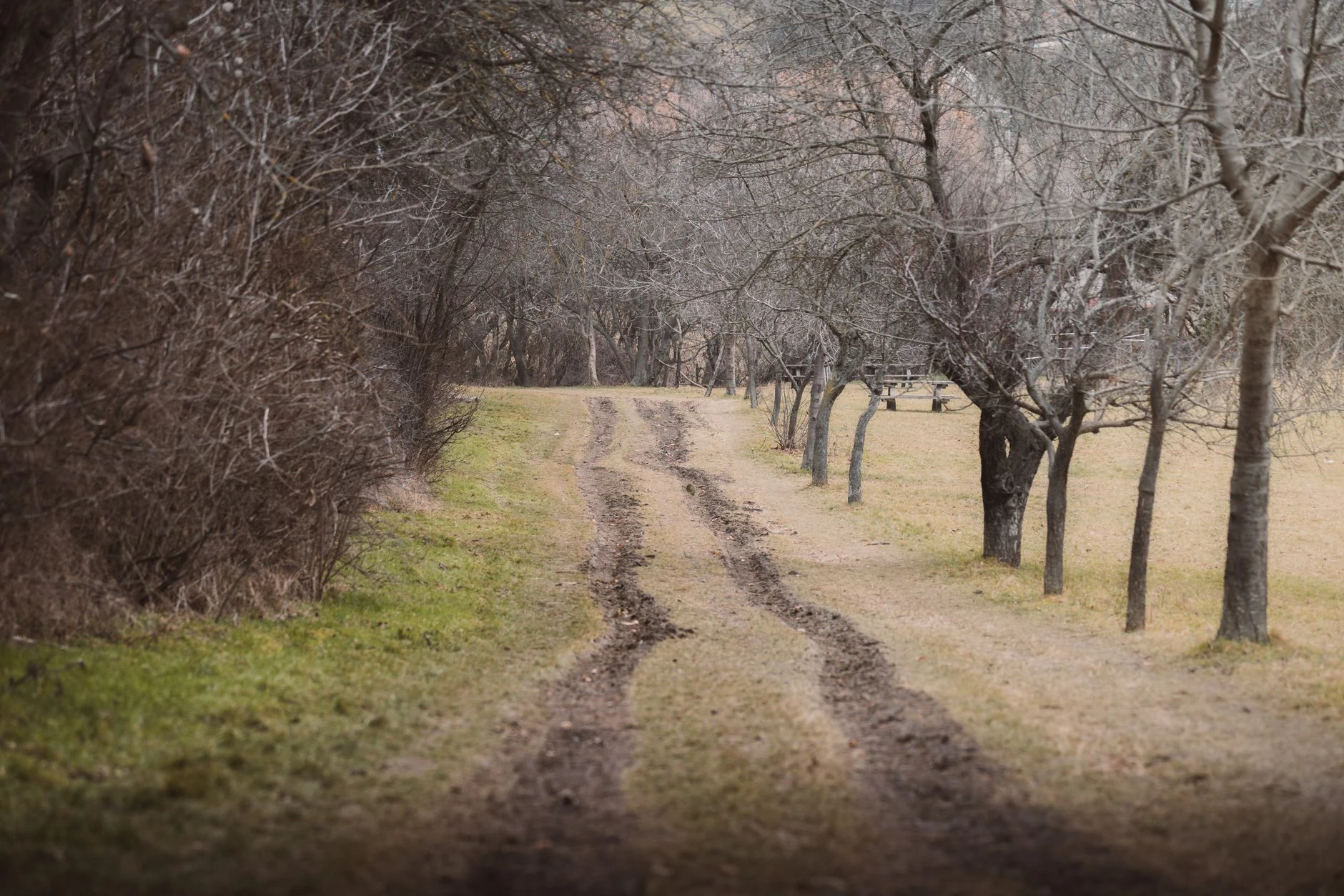
- **Ruts.** Tires cut grooves into the soft surface. Once ruts form, water collects in them, and they get deeper every time someone drives through.
- **Soft spots and sinking.** Low areas turn boggy. A two-wheel-drive car can get stuck in a spot that was solid a week earlier.
- **Washboarding and washouts.** Heavy rain on a thawing grade can carry your gravel downhill and leave gullies behind.
- **The tracking-in.** Mud finds its way onto boots, into the car, onto the floors. This is the part everyone remembers.
If you're a weekender
You have one big advantage: you can often choose *when* you drive on it. A few habits go a long way.
- **Drive on it when it's firm.** Early morning, when the ground is still frozen from overnight, is far kinder to a dirt driveway than a warm afternoon when it's fully thawed. If you can time your arrival and departure, do.
- **Stay in existing tracks, or avoid them — pick one and commit.** Wandering back and forth chews up more of the surface.
- **Don't gun it.** Spinning tires dig holes. If you feel yourself losing traction, ease off rather than flooring it.
- **Keep a plan B.** Know where you can park closer to the road if the driveway is impassable for a couple of days, and keep decent footwear in the car for the walk in.
If you're shopping for a weekend place, this is worth asking about directly. How long is the driveway, what's it made of, how steep is it, and does it hold water? A seller or a neighbor can usually tell you honestly how bad a typical spring gets.
If you live here full-time
Mud season is mostly a drainage and materials question, and it's very manageable once the driveway is built right.
- **Drainage is everything.** Water that runs off and away doesn't turn your driveway to mush. Ditches, culverts and a slight crown (a center that's higher than the edges) do most of the work. If water is pooling on your driveway, that's the thing to fix.
- **The right gravel matters.** A base of larger stone with a compacted crushed-stone surface holds up far better than fine dirt or loose round gravel. Many people add fresh material after mud season each year, once things dry out.
- **For chronic soft spots**, a fabric underlayment (geotextile) under new stone can keep the base from sinking into the mud below. This is a common fix worth asking a local excavator about.
- **Don't try to regrade or add gravel mid-mud-season.** Working wet ground usually makes it worse and wastes material. Wait until it dries.
[VERIFY: Megan — if you want to name a local excavator or gravel supplier you trust, add it here. I've left it general so nothing is invented.]
The ice and snow mistakes that make spring worse
Mud season starts with what you did all winter. A few common habits from paved, plowed suburbs cause real trouble on a rural driveway:
- **Don't let the plow scrape down to the dirt.** Setting a plow blade too low, or plowing a gravel driveway aggressively, drags your gravel off into the snowbanks and the yard. Come spring, your surface is gone and your ruts are deeper. A good plow operator sets the blade to leave a thin protective layer, or uses shoes on the blade. If you hire someone, this is worth discussing before the first storm.
- **Don't pile snow where it will drain back onto the driveway.** Snowbanks melt. If you push them to the uphill side, all that meltwater runs straight across your driveway during the thaw. Push snow downhill of the driveway where you can, so the melt drains away from it.
- **Don't rely on rock salt on gravel or near your well and plants.** Heavy salt use can damage vegetation, and it does nothing for the underlying mud problem. Sand or grit gives traction without the runoff issues.
- **Don't ignore the ice dam at the bottom.** Water often refreezes where the driveway meets the road, especially in shade. Chip it out or treat it before it builds into a ridge you have to drive over.
- **Don't clear it down to bare ground mid-winter and assume it's done.** Bare, exposed ground thaws and refreezes and turns soft earlier. A managed snow cover isn't the enemy.
What to keep in the car and the mudroom
A few unglamorous things make the season much easier:
- Real boots you don't mind ruining, kept by the door. This is what a mudroom is actually for.
- A bag of sand or grit in the trunk, both for traction and for a stuck tire.
- A doormat situation that can handle serious mud, plus a boot tray inside.
- Patience with your floors. The mud is temporary.
If you're buying, one honest note: **all-wheel or four-wheel drive is genuinely useful here**, more for mud season and unplowed mornings than for anything glamorous. Plenty of people manage with two-wheel drive and good tires, but it's a real quality-of-life difference on a long or steep driveway.
Keeping it in perspective
Mud season is a few weeks. It's the price of a driveway that's long enough to have some privacy and land enough to matter. People who've lived here a while don't dread it — they just plan around it, keep their gravel topped up, and know it ends. Then the ground firms, the trees leaf out, and you forget about it until next year.
The homes that handle it best aren't the fanciest ones. They're the ones with good drainage, a sensible driveway surface, and someone who understood the grade when they built it. That's the kind of thing worth looking at closely when you walk a property — not just the kitchen.
If you're weighing a place out here and want a clear-eyed read on the driveway, the drainage, the road it sits on, and what a typical spring really asks of you, I'm glad to walk it with you and tell you what I see. That's the part I like — the details that make a place livable, not just lovely. Reach out anytime, and we'll take it one honest question at a time.